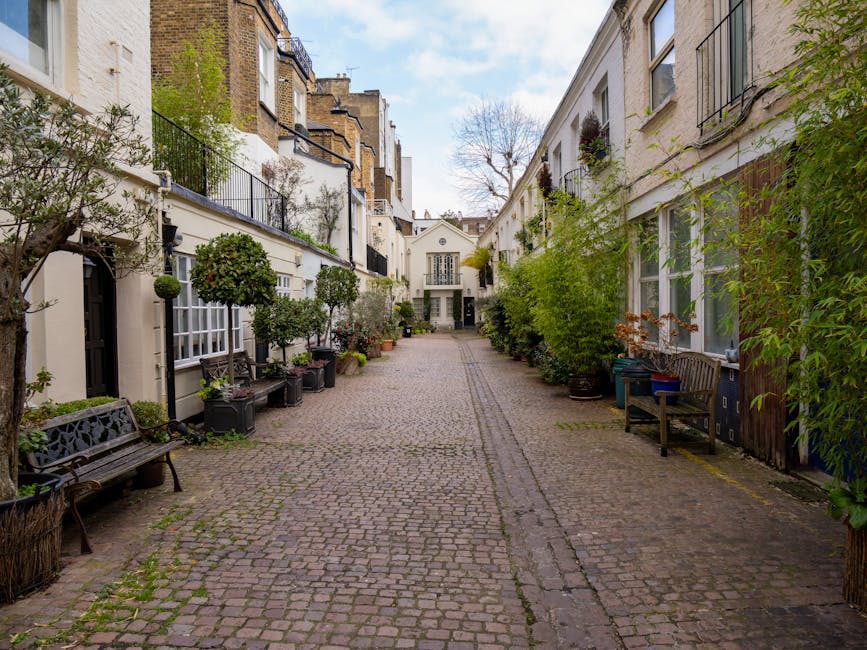
EC2A gardeners access problems in narrow mews and solutions

Narrow mews, gated courtyards, basement steps, shared walkways, parked cars, and awkward bin stores can turn a simple garden visit into a bit of a puzzle. If you live or work in EC2A, you will know the feeling: the garden is right there, but getting tools, clippings, and people in and out cleanly is another matter entirely. This guide on EC2A gardeners access problems in narrow mews and solutions explains what usually goes wrong, why it matters, and how experienced gardeners work around the constraints without making a mess of your day or your property.
We will cover planning, equipment choices, communication, safety, and the kind of practical fixes that actually make life easier in Shoreditch's tighter streets and mews-style access routes. A lot of this is common sense once you see it laid out. But in fairness, it is the sort of common sense people only learn after one too many trips carrying a hedge trimmer through a narrow passage in the rain.
Practical summary: the best access solution is rarely about forcing larger equipment through a tight space. It is usually about planning the route, choosing the right tools, protecting surfaces, agreeing entry points, and working in the right order.
- Why access problems matter in EC2A mews gardens
- How gardeners handle tight-access jobs
- Benefits of getting the access plan right
- Who this is for
- Step-by-step guidance
- Expert tips for better results
- Common mistakes to avoid
- Tools and useful recommendations
- Best practice, safety, and compliance
- Methods compared
- Real-world example
- Checklist
- Frequently asked questions
Why EC2A gardeners access problems in narrow mews and solutions Matters
Access issues are not just a small inconvenience. In narrow mews, they affect the whole shape of the job. A garden that is perfectly manageable on paper can become time-consuming if there is nowhere to unload, no direct route for waste, or a shared passage that needs protecting. Add London weather into the mix and you get slippery paving, muddy wheels, wet cuttings, and the odd frustrated neighbour peering through a window. Lovely.
For homeowners, landlords, managing agents, and business premises in EC2A, the right access solution matters because it affects cost, speed, tidiness, and whether the work can be completed safely in one visit. If a gardener has to improvise every five minutes, the job takes longer and the risk of damage rises. That is true whether the task is regular lawn mowing, border tidying, seasonal pruning, or a full clearance.
There is also the human side. Mews properties often involve shared entrances, close neighbours, and limited privacy. A considerate setup makes the whole experience calmer for everyone. You notice it straight away: less clatter, fewer awkward apologies, and a smoother start to the visit.
In practice, good access planning protects three things:
- Your property from scuffs, breakage, and accidental mess
- The gardener's efficiency so time is spent on the garden, not on logistics
- Neighbour relations by keeping noise, disruption, and blocked routes to a minimum
If the garden is overgrown or cluttered as well as hard to reach, it may be worth pairing access planning with garden clearance or a broader garden maintenance plan so the space becomes easier to manage month after month.
How EC2A gardeners access problems in narrow mews and solutions Works
At ground level, the process is simple: assess the route, decide how tools and waste will move, protect vulnerable surfaces, and choose the right method for the available space. The real skill is in doing that without overcomplicating it. A good gardener does not just arrive and hope for the best.
Most tight-access jobs follow a pattern. First, the team checks the entrance width, steps, gates, corners, and any shared passages. Then they identify where machinery can safely go and where it cannot. On some jobs, a compact mower or hand tools are the answer. On others, the right move is to break the work into sections and carry arisings out in smaller loads. It sounds basic, but it saves time and protects the site.
In narrow mews, the solution often relies on the following practical choices:
- Smaller or lighter equipment that can be lifted or manoeuvred by hand
- Bagging waste on site rather than leaving piles near the route
- Temporary protection for floors, steps, gates, and paintwork
- Clear entry instructions so nobody is guessing which door or code to use
- Time-based planning to avoid the busiest delivery or parking periods
That last point is underrated. In a tight EC2A mews, a job can become much easier simply by starting at the right time of day, before the street fills up or before the neighbour decides to reverse a car into the only usable gap. It happens more often than people think.
Where the access is especially difficult, a contractor may also coordinate around adjacent services such as hedge trimming, tree lopping and removal, or landscaping so the job sequence makes sense and waste can be removed in one efficient run.
Key Benefits and Practical Advantages
When access is handled properly, the difference is obvious. The garden gets finished more neatly, the site stays safer, and everyone spends less time negotiating space. That is the quiet value of good planning. It is not glamorous, but it matters.
- Less disruption: narrow routes stay clear and neighbours are less affected
- Better finish quality: the team can focus on the work rather than fighting the layout
- Reduced damage risk: fewer knocks to walls, gates, paving, and planters
- More accurate pricing: jobs are easier to quote when the access route is understood
- Cleaner handover: waste, clippings, and debris are removed in a controlled way
For some properties, there is a further upside: once access is mapped out, repeat visits become easier and quicker. A regular maintenance routine can be built around the property's quirks instead of fighting them every time. That can be especially useful for landlords, block managers, or busy owners who want a dependable schedule rather than one-off improvisation.
There is also a commercial benefit. Clear access information helps the service provider quote more honestly. If you want a better idea of what shapes job pricing, the company's pricing and quotes information is a useful place to start.
Who This Is For and When It Makes Sense
This topic is relevant for anyone responsible for a garden or planted outdoor space in a tight EC2A setting. That could be a homeowner with a rear mews garden, a landlord managing a rental between tenancies, a resident's association looking after communal frontage, or a commercial property with a small planted courtyard behind a building.
It tends to matter most when the access is genuinely awkward, not just mildly inconvenient. For example:
- Access only through a narrow side passage
- Steps down to the garden from street level
- Shared access with neighbours or another property
- Limited storage for tools and waste sacks
- No on-site parking or unloading space
- Delicate paving, decking, or boundary finishes that need protection
If the space includes timber surfaces or raised platforms, it may be sensible to combine gardening with decking services or at least discuss how to protect finishes while work is carried out. Mews properties can be a bit fussy in that way, but fair enough - the detail is what keeps them looking good.
This also makes sense when your current gardener has been struggling with the layout, arriving underprepared, or leaving mess behind because the site is difficult to move around. A better access plan usually improves the whole service rather than just one visit.
Step-by-Step Guidance
Here is a practical way to handle narrow-mews access without overthinking it.
- Walk the route first. Measure widths, note steps, check gate openings, and look for pinch points. If the route is shared, confirm who needs access and when.
- Identify the main task. Is this a simple mow, a cut-back, a clear-out, or a larger improvement project? The answer affects the equipment and the waste strategy.
- Decide how waste will leave the site. Small bags, folding barrows, compact tubs, or repeated short carries may be better than trying to move one large load.
- Protect surfaces before work starts. Use sensible coverings for floors, steps, and any finishes that scratch easily. This is one of those steps people skip until they regret it.
- Choose tools that fit the route. Smaller hand tools, cordless kit, and compact machines often work better than bulkier alternatives.
- Set access instructions clearly. Share the gate code, contact name, parking detail, or collection point in advance.
- Work in a logical sequence. Prune, clear, and collect waste in stages so nothing blocks the route halfway through.
- Finish with a careful sweep. In tight spaces, the last 10% of tidying makes a huge difference to how the whole job feels.
A small but useful habit: ask for a photo of the access route before the appointment if the layout is unusual. One or two pictures can prevent a lot of confusion. A dark corridor at 8am can look very different in daylight, too.
Expert Tips for Better Results
Some of the best fixes are unglamorous. They are the sort of things that never make a brochure but quietly save the day. To be fair, that is often how real-world gardening works.
- Keep the route honest. If the passage is too tight for a mower, say so early. Nobody wins by pretending otherwise.
- Use modular waste removal. Smaller bags are easier to carry, stack, and pass through narrow spaces.
- Schedule around neighbours. Early deliveries, recycling collections, or school-run traffic can make a mews feel far tighter than it is.
- Preserve the turning space. Do not fill the only clear patch with bags and tools before you need it.
- Think about the exit before the entry. It is easy to get in. Getting out with waste, tools, and muddy boots is where things go sideways.
If the space has been neglected for a while, a one-off tidy can be the best first step before regular maintenance begins. You may find the site is easier to service after a proper reset, especially if you combine it with a broader services overview discussion to match the work to the property's needs.
Another simple tip: keep a small list of access quirks for future visits. Things like "rear gate sticks after rain" or "avoid the left side of the path with heavy loads" sound tiny, but they help a lot. They really do.
Common Mistakes to Avoid
Most access problems are made worse by one of a handful of predictable mistakes. The good news? They are all avoidable.
- Assuming standard equipment will fit. A job can look straightforward until the mower reaches the gate.
- Ignoring waste movement. If cuttings have nowhere to go, they quickly create clutter and trip hazards.
- Skipping surface protection. Tight routes often mean repeated contact with walls, steps, and sills.
- Not warning neighbours or building users. In shared mews settings, communication matters more than people expect.
- Trying to do too much at once. A cramped space gets messier fast if pruning, mowing, and clearance all happen in the wrong order.
- Overlooking insurance and safety expectations. Professional contractors should be able to explain how they protect the site and themselves.
One of the classic mistakes is underestimating how much time a narrow access route adds. "It's only a small garden" can be misleading. A tiny courtyard with three awkward thresholds may take longer than a bigger garden with a clean rear entrance. Funny how that works.
Tools, Resources and Recommendations
You do not need exotic kit. In narrow mews properties, practical usually beats fancy. The best tools are the ones that reduce bulk, noise, and movement problems.
| Access challenge | Useful approach | Why it helps |
|---|---|---|
| Very narrow side passage | Hand tools, compact bags, lightweight carrier | Fits through tight spaces without forcing movement |
| Shared entry or hallway | Surface protection and clear route planning | Reduces complaints and accidental marking |
| Limited waste storage | Staged bagging and frequent removal | Prevents the route becoming blocked mid-job |
| Delicate paving or decking | Protective coverings and careful wheel choice | Lowers the chance of scuffs and wear |
| Overgrown borders | Cut-back before detailing | Makes the job manageable and safer |
Where a property needs ongoing help, the most useful resource is usually a regular maintenance arrangement rather than a one-off fix. A sensible maintenance plan may include mowing, pruning, edging, and occasional clearance so access remains easier over time. For many EC2A properties, that is the real win.
If you are trying to find a contractor who is comfortable working in tight urban spaces, check whether they discuss access during the estimate, explain how waste will be removed, and show awareness of safety and property protection. Those little signals matter more than polished sales language.
Law, Compliance, Standards, or Best Practice
For gardening work in narrow mews, the most important point is not a headline law or a dramatic rulebook. It is responsible practice. In the UK, contractors should work safely, avoid causing damage, manage waste properly, and be transparent about what a job involves. That includes access limitations, likely hazards, and any need for temporary site protection.
From a customer's perspective, good practice usually means the provider is clear about:
- how they will enter and exit the property
- how they will reduce slip, trip, and impact risks
- how waste and green waste will be handled
- whether they have appropriate insurance and safety procedures
- how they will treat shared areas, gates, and neighbouring access respectfully
If you want a sense of the broader standards a business should be thinking about, the site's health and safety policy and insurance and safety information are useful indicators of how the company approaches risk and site care. You can also read the accessibility statement if your property has access-related needs that affect how work should be arranged.
Best practice also includes communication. If access depends on someone being present to unlock a gate, or if the route changes because of building works, say so before the visit. It saves everyone time. Honestly, it saves a lot of back-and-forth too.
Options, Methods, or Comparison Table
There is no single best method for every mews garden. The right choice depends on the route, the size of the job, and how much waste needs to be taken out. Here is a simple comparison.
| Method | Best for | Strengths | Limitations |
|---|---|---|---|
| Hand tools only | Very tight access, small spaces, detailed tidy-ups | Quiet, flexible, easy to carry | Slower on larger jobs |
| Compact powered equipment | Medium-access gardens with some route width | Faster, more efficient for repeated visits | Still needs careful manoeuvring |
| Staged waste removal | Jobs with a lot of cuttings or debris | Keeps the route clear throughout the visit | Can involve more handling |
| Full clearance before maintenance | Overgrown or cluttered gardens | Creates breathing space and improves future access | More upfront work |
For many EC2A properties, the best result is a blend of methods rather than one fixed approach. A one-off garden clearance may open the route, after which regular maintenance keeps things manageable. That sequence is often the practical sweet spot.
Case Study or Real-World Example
Imagine a rear mews garden behind a townhouse off a narrow EC2A lane. The entrance is through a side gate that only opens part-way because of a bin store. There are a few steps down, a slim paved path, and a small lawn bordered by mixed planting. Nothing dramatic. But enough to make routine maintenance awkward.
On the first visit, the gardener walks the route before unloading anything. They notice the gate catches on a planter, so the planter is moved temporarily. They place protective covering on the steps, carry tools in a light bag rather than a rigid box, and keep the mower outside because the passage is too tight for safe movement. The lawn is cut with a lighter approach, the borders are tidied by hand, and all green waste is bagged in smaller loads rather than piled near the exit.
The clever bit is not the cutting. It is the order of operations. By clearing the access route early, the gardener avoids constantly lifting things back over the same threshold. By using small waste bags, they prevent a bottleneck. By finishing with a quick sweep, the space looks neat and the homeowner does not feel they need to inspect every corner with a torch. Which, let's be honest, nobody enjoys doing at 7pm.
The result is simple: the job takes less strain, fewer mistakes happen, and the next visit is easier because the access plan is now understood. That is the sort of improvement you want in a narrow mews setting.
Practical Checklist
Use this before the visit or when briefing a gardener about a tight-access EC2A property.
- Confirm the exact entry point and whether a key, code, or escort is needed
- Measure the narrowest part of the route if equipment will be carried through
- Identify steps, slopes, wet areas, and slippery surfaces
- Check whether any gates, planters, or bins restrict movement
- Agree where waste can be set down before removal
- Protect delicate paving, paintwork, decking, or door thresholds
- Tell neighbours or shared users if access will be partially blocked
- Explain any time windows, parking limits, or building rules
- Decide whether the garden needs clearance before routine maintenance
- Make sure the contractor understands the site before arriving
If you can tick most of those boxes, the job usually goes much more smoothly. Not perfect, maybe, but a lot smoother.
Get a free quote today and see how much you can save.
Conclusion
EC2A gardeners access problems in narrow mews and solutions are really about respect for the space. Respect for the route, the surfaces, the neighbours, and the practical limits of the property. Once those limits are understood, the work becomes far more predictable and far less stressful.
That is why the best outcomes come from planning, not improvising. The right tools help. Clear instructions help. A tidy waste strategy helps. But above all, a careful approach helps. In a narrow mews, small details make a very big difference. A good one, thankfully.
If you are dealing with a tricky access setup in EC2A, take heart: it is manageable, and with the right preparation it can be handled neatly without turning the day into a battle.
Frequently Asked Questions
What are the most common access problems in narrow EC2A mews gardens?
The usual issues are narrow gates, tight side passages, steps, shared walkways, limited parking, and nowhere sensible to stage tools or waste. Sometimes the route is physically possible but awkward enough that the whole job needs a different method.
Can gardeners still work if a mower will not fit through the access route?
Yes. In many cases, the answer is hand tools, compact kit, or a mixed approach. If a mower cannot pass safely, forcing it through is usually the wrong call. A good gardener will adapt the method instead.
How do gardeners protect narrow mews surfaces from damage?
They usually use temporary coverings, light handling, and careful route planning. The main aim is to avoid scuffs, scratches, and repeated impact on steps, thresholds, paintwork, and paving.
Is narrow access likely to make gardening more expensive?
It can, depending on how much extra time, handling, or protection is needed. That said, clear access information often helps avoid surprise costs because the job can be priced more accurately from the start.
What should I tell a gardener before they arrive at my mews property?
Tell them the entry point, any codes or keys, the narrowest parts of the route, where parking or unloading is possible, and whether the garden includes steps, shared access, or delicate surfaces. A few details upfront save a lot of hassle.
Do I need to clear the garden before the gardener comes?
Not always, but removing loose items, bikes, toys, and anything blocking the route makes a big difference. If the space is heavily overgrown or cluttered, a one-off clearance first can be the better option.
Can narrow mews access affect waste removal?
Yes. Waste may need to be bagged in smaller loads, carried out in stages, or removed using a more careful route. If waste movement has not been planned, the site can quickly become cluttered and harder to work in.
What kind of gardens benefit most from regular maintenance in EC2A?
Small courtyard gardens, rear mews gardens, planted terraces, and properties with shared access all tend to benefit from regular maintenance. Keeping growth under control makes access easier over time, which is a quiet but important advantage.
How can I tell whether a gardening company understands tight-access jobs?
Look for practical questions during the enquiry stage. Good signs include asking about gate width, waste removal, surface protection, access times, and whether they need photos before quoting. If they ask sensible questions, that is a good sign.
What if access changes on the day because of cars, deliveries, or neighbours?
It happens. In shared mews settings, access can change quickly. The best approach is to let the gardener know as soon as possible so they can adjust the order of work or reschedule the most difficult parts.
Are there special safety concerns in narrow mews gardens?
Yes. The main concerns are slips, trips, lifting strain, and accidental damage in tight spaces. Good site protection, careful carrying, and clear communication all help reduce those risks.
Where can I learn more about the company's standards before booking?
You can review the company's about us page, along with its health and safety policy, insurance and safety information, and recycling and sustainability approach if you want a fuller picture of how work is handled.